
Blog
Perfume vs Attar: Key Differences and Which One is Best?

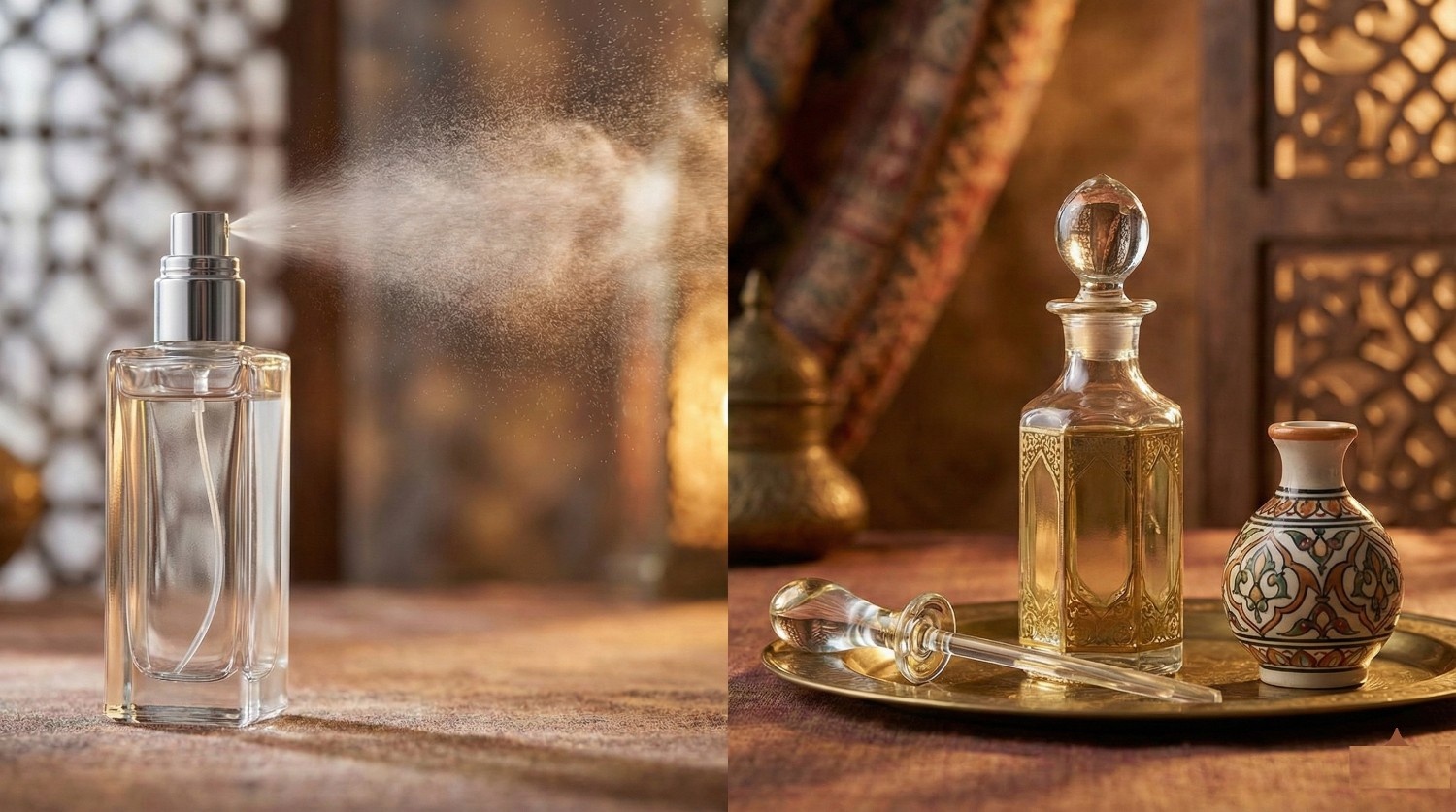
The world of fragrance is divided into two great traditions: the alcohol-based sprays of the West and the concentrated oils of the East. For centuries, this has been a debate of preference, culture, and chemistry.
On one side, you have Perfume (Eau de Parfum, Eau de Toilette), known for its sparkling top notes, wide projection, and ease of use. On the other, you have Attar (or Ittar), the ancient, alcohol-free oil blends that offer deep, intimate, and incredibly long-lasting scents.
If you are standing at the crossroads of scent, trying to decide which format deserves a place on your vanity, you aren’t alone. The choice isn’t just about “smelling good”—it’s about how the fragrance interacts with your skin, your environment, and your lifestyle.
In this comprehensive guide, we will break down the science, history, and practical differences between perfume and attar to help you decide which one is better for you.
In May 2015, a global action plan to tackle AMR was endorsed at the World Health Assembly, supported by the Food and Agriculture Organization of the United Nations (FAO) and the World Organisation for Animal Health (OIE).
1. Defining the Contenders
To understand the difference, we must first look at what is inside the bottle.
What is Perfume?
Modern perfume is a mixture of aromatic compounds (essential oils, synthetics, absolutes) dissolved in a solvent, typically alcohol (ethanol) and a small amount of water.
Format: Spray / Mist.
Concentration: Varies from 5% (Cologne) to 20-30% (Parfum).
The Mechanism: The alcohol acts as a carrier. When sprayed, the alcohol evaporates quickly, lifting the scent molecules into the air. This creates “projection”—the ability of the scent to travel across a room.
What is Attar?
Attar is a natural, highly concentrated fragrance oil derived from botanical sources like flowers, herbs, spices, and woods. Traditionally, these are distilled into a wood base (like sandalwood) or, in modern times, other carrier oils (like jojoba or paraffin).
Format: Dab-on / Roll-on.
Concentration: 100% oil (no alcohol).
The Mechanism: Because there is no alcohol to evaporate, the scent does not “explode” into the air. Instead, it relies on your body heat to slowly warm the oils, releasing the aroma gently over a long period.
2. Alcohol vs. Oil: The Chemistry of Scent
The primary difference lies in the carrier: alcohol versus oil. This single factor dictates how the fragrance behaves on your skin.
The “Sillage” (The Trail)
Perfume: Because alcohol is volatile, it diffuses fragrance molecules rapidly. This creates a strong “sillage” or scent trail. If you want to walk into a party and have heads turn, or if you want your scent to be noticed by someone standing three feet away, perfume is the superior choice.
Attar: Oils are heavier. They stay close to the skin. Attar creates an intimate “scent bubble.” Someone usually needs to be in your personal space (a hug or a whisper) to smell it. It is less intrusive but more personal.
The Evolution (The Pyramid)
Perfume: Alcohol-based scents are famous for their Olfactory Pyramid. You get a blast of fresh Top Notes (citrus/fruit) that fade into Heart Notes, and finally settle into Base Notes. It is a journey that changes hour by hour.
Attar: Attars are often linear. Because they lack the alcohol to lift the lighter top notes, what you smell at the beginning is very close to what you smell at the end. They are rich, dense, and consistent.
3. Longevity: Which Lasts Longer?
If we are strictly talking about how long the scent remains on the skin, Attar usually wins.
Because oils do not evaporate, they cling to the skin. A single drop of high-quality rose or oud attar can remain on the wrist for 24 hours, surviving even a shower.
However, there is a catch. While an attar might last longer, it might not project for that long. You might still smell it on your wrist at 8 PM, but nobody else will.
Perfume typically lasts 4 to 8 hours (depending on the concentration), but it projects better during that time. Furthermore, high-quality inspired perfumes, like those crafted by Auralis5, are formulated with higher concentrations of fragrance oils (Eau de Parfum levels) to bridge this gap. They offer the projection of a spray with longevity that rivals traditional oils, giving you the best of both worlds.
4. Skin Sensitivity and Health
This is a major deciding factor for many users.
The Sensitive Skin Factor
Attar: Generally the winner for sensitive skin. Being alcohol-free, it does not dry out the skin or cause the stinging sensation that ethanol can provoke on shaved or irritated skin.
Perfume: The alcohol content can be drying. However, most modern perfumes are formulated to be skin-safe. If you have extreme sensitivity or conditions like eczema, you should test a spray on a small patch of skin first.
The “Natural” Argument
Historically, attars were 100% natural. Today, however, many cheap market attars are filled with synthetic chemicals and low-grade carrier oils. Conversely, high-end perfumes often contain exquisite natural ingredients. Do not assume “Attar = Natural” and “Perfume = Chemical.” Always check the source and reputation of the brand.
5. Weather and Seasonality
The environment plays a massive role in how these products perform.
Summer and Humidity
Winner: Perfume. In high heat and humidity, thick oils (Attar) can feel sticky and cloying. They can mix unpleasantly with sweat. Perfume, with its alcohol base, provides a cooling, refreshing mist. The evaporation process feels lighter and cleaner in the summer heat. Fresh, citrusy, or aquatic perfumes are staples for hot weather.
Winter and Dry Cold
Winner: Tie (leaning towards Attar). Cold air kills scent projection. Alcohol evaporates too fast in dry winter air, sometimes making perfumes feel fleeting. Attars thrive here—body heat under layers of clothes warms the oil, creating a cozy, consistent aura. However, a strong, woody Eau de Parfum (like those found in the Auralis5 collection) can cut through the cold air effectively, providing warmth without the mess of oils.
6. The Verdict: Which Is Better?
There is no single winner, only the right choice for your needs.
Choose Attar If:
You have very sensitive or dry skin.
You prefer natural, earthy, or very heavy musky/woody scents.
You work in a “scent-free” environment (like a hospital) and want a scent that only you can smell.
You enjoy the ritual of dabbing oil on pulse points.
Choose Perfume If:
You love the “journey” of a scent (Top, Middle, and Base notes).
You want projection and sillage (you want to smell good to others, not just yourself).
You prefer a non-greasy application that won’t stain cuffs or collars.
You want variety. The world of perfume offers a vastly wider range of scent profiles—from aquatic and gourmand to fruity and floral—that attars often struggle to replicate.
The Modern Solution: High-Quality Inspired Perfumes
For many modern fragrance lovers, the ideal scenario is the performance of an attar combined with the elegance and projection of a perfume.
This is where the “Inspired By” market has revolutionized the industry. Brands like Auralis5 have mastered the art of taking complex, high-end scent profiles (often found in niche perfumery) and offering them in high-concentration spray formats.
By choosing a premium inspired perfume from Auralis5.com, you aren’t sacrificing quality. You get:
Complexity: The intricate note breakdown that attars often lack.
Convenience: A quick spray without the oily residue.
Value: The ability to own a “wardrobe” of scents—fresh for the gym, spicy for the date, woody for the office—without the designer price tag.
Frequently Asked Questions (FAQs)
Q: Can I layer Attar and Perfume together?
A: Absolutely. In fact, this is a pro-tip for longevity. Apply a dab of attar (like a simple musk or vanilla oil) to your pulse points, rub it in gently, and then spray your alcohol-based perfume over it. The oil acts as a primer, holding the perfume to your skin for hours longer.
Q: Does Attar expire?
A: High-quality attars (especially those with a sandalwood base) are like wine—they can actually improve and deepen with age. However, cheaper attars using vegetable oils can go rancid after a few years. Perfumes generally last 3-5 years if stored correctly.
Q: Why is Perfume more expensive than Attar?
A: This is a misconception. While cheap street-market attars are inexpensive, real authentic Oud or Rose attar is one of the most expensive substances on earth, costing thousands of dollars per ounce. Commercial perfumes have a mid-range price point due to branding, packaging, and marketing. Auralis5.com bridges this gap by removing the “brand tax,” offering luxury-grade scent structures at accessible prices.
Q: Will Attar stain my clothes?
A: Yes. Attar is pure oil. If you dab it on your neck and it rubs against a white collar, it will leave a grease mark. Perfume, being alcohol-based, generally does not stain unless it is a very dark-colored juice sprayed too close to the fabric.
Conclusion
The battle between Perfume and Attar isn’t about one being superior; it’s about the experience you desire. Attar offers a quiet, spiritual, and enduring connection to the earth. Perfume offers a bright, expressive, and projecting declaration of style.
For the modern individual who values versatility, projection, and a wide array of scent profiles, a high-concentration Eau de Parfum remains the gold standard. It fits seamless into a busy lifestyle while ensuring you leave a memorable impression.
Ready to find a scent that combines the best of longevity and projection? Explore the curated collection at Auralis5.com. Discover premium inspired fragrances that deliver the depth you crave with the sophistication you deserve.
Whether you choose oil or spray, wear it with confidence. That is the most attractive note of all.
Best For: Professional settings, outdoorsy types, and cooler weather.